How To Feel Close To Your Husband Again As A Woman In Menopause, Using A 10-Minute Daily Check-In For 21 Days: Without Faking Desire, Avoiding The Conversation, Or Feeling Like Something Is Wrong With You.
The car rides that used to have easy conversation now just have the radio. You are snapping at him over things that would not have bothered you two years ago, and you cannot remember the last time you actually wanted him to reach for you. You have started to quietly wonder if this is just what happens now, or if something has gone wrong between you that cannot be fixed.

You notice it in small moments first.
The hand that used to land on your knee without either of you thinking about it now just stays on the gearstick. The easy back and forth you used to have in the car has quietly turned into the radio filling the silence instead.
"Am I just tired, or is something actually wrong between us?"
You have started snapping at him over things that would not have registered two years ago. A tone in his voice. A dish left in the sink. Small things that somehow feel unbearable in the moment, and then you feel guilty about an hour later.
And underneath all of it is the part you have not said out loud to anyone: you are not sure you want him the way you used to, and you do not know if that is temporary or permanent. You are not even sure you are allowed to ask that question about your own marriage.
So you have started quietly wondering whether the distance between you means something is broken in the relationship itself. Whether you have simply grown apart. Whether this is what twenty years of marriage eventually looks like for everyone.
You have not said any of this to him. Not properly. And you certainly have not said it to a doctor with fifteen minutes on the clock and a checklist that does not have a box for "I think my marriage is quietly falling apart."
Your marriage did not start failing. Your body started changing, and nobody translated what that meant for the two of you.
The mood swings, the falling interest in sex, and the growing distance you are feeling are some of the most well documented parts of perimenopause and menopause, connected to real, measurable shifts in hormones, not a sign that the relationship itself has gone wrong.
Desire in particular does not disappear the way most women fear it does. Sex researcher Rosemary Basson's work on responsive desire shows that wanting sex often shifts from something that arrives on its own to something that responds to closeness that is already there, a completely different pattern, not an absence of one. Combine that with what the Gottman Institute has documented about the small daily moments, called bids for connection, that quietly hold long marriages together, and a clearer picture starts to form: this is a transition to understand, not a marriage to grieve.

I am not a doctor, a therapist, or a relationship coach. I spent close to two years quietly assuming my own marriage was falling apart before a routine blood test told me what my hormones had already been doing for a while. Once I understood what was actually happening in my body, I went looking for the research that could have told me sooner, on desire, mood, and the small things that keep couples close, and started using it in my own marriage before I ever thought to write it down. This guide is what I put together once I stopped blaming the marriage and started asking better questions.
21-day protocol + 4 bonuses. Delivered instantly. £10.
If any of this feels familiar, you have not failed at this. You just have not had the full picture yet.
- Planned a date night to "reconnect." It felt forced, like performing a version of closeness neither of you actually felt that evening.
- Read articles on "spicing up your marriage." Written for couples with the same desire levels as five years ago, not what you are dealing with now.
- Told yourself it will pass on its own. Some months it seems to. Then it comes back, and you still do not know why.
- Quietly blamed yourself for not wanting him the way you used to. Without knowing that desire itself changes shape during this transition. It does not simply vanish.
- Searched your symptoms and your marriage problems separately. Because nothing you found ever connected the two, even though they are the same story.
- Waited for him to bring it up first. He has noticed the distance too. He is just as unsure how to start the conversation as you are.
A 21-day system that helps you understand what is actually changing in your body, and use that understanding to close the distance with your husband, not by forcing anything, but by finally having the words neither of you has had until now.
Understanding first. Closeness after.
- You know, in your own words, what is actually happening to your mood, sleep, and body, instead of quietly wondering if you are losing yourself.
- You have had one honest, prepared conversation with your husband about it, instead of hoping he will somehow work it out on his own.
- You understand your own pattern of desire instead of measuring yourself against a version of it that no longer fits.
- You have real, practical answers for the physical side of intimacy, instead of silence and hoping it improves by itself.
- You are noticing, and rebuilding, the small daily moments of connection that quietly hold a marriage together.
Is This Actually For You?
This is for you if
- You are in perimenopause or menopause and have noticed real distance growing in your marriage.
- You want to understand what is happening in your body before you decide what it means about your relationship.
- You are willing to have one honest conversation with your husband, even if it feels awkward at first.
- You want practical tools and scripts, not just an explanation of what is happening to you.
This is not for you if
- You are looking for a way to avoid ever discussing this with your husband directly.
- You are dealing with a relationship issue that predates this transition entirely, such as ongoing infidelity or abuse. A licensed couples therapist is the right next step for that, not this guide.
- You are hoping for hormone therapy or medical treatment guidance. This guide will tell you when and how to raise that with your GP, but it does not replace medical care.
- You want a guarantee that desire returns to exactly what it was twenty years ago. This is about understanding and closeness, not a promise of an identical outcome.
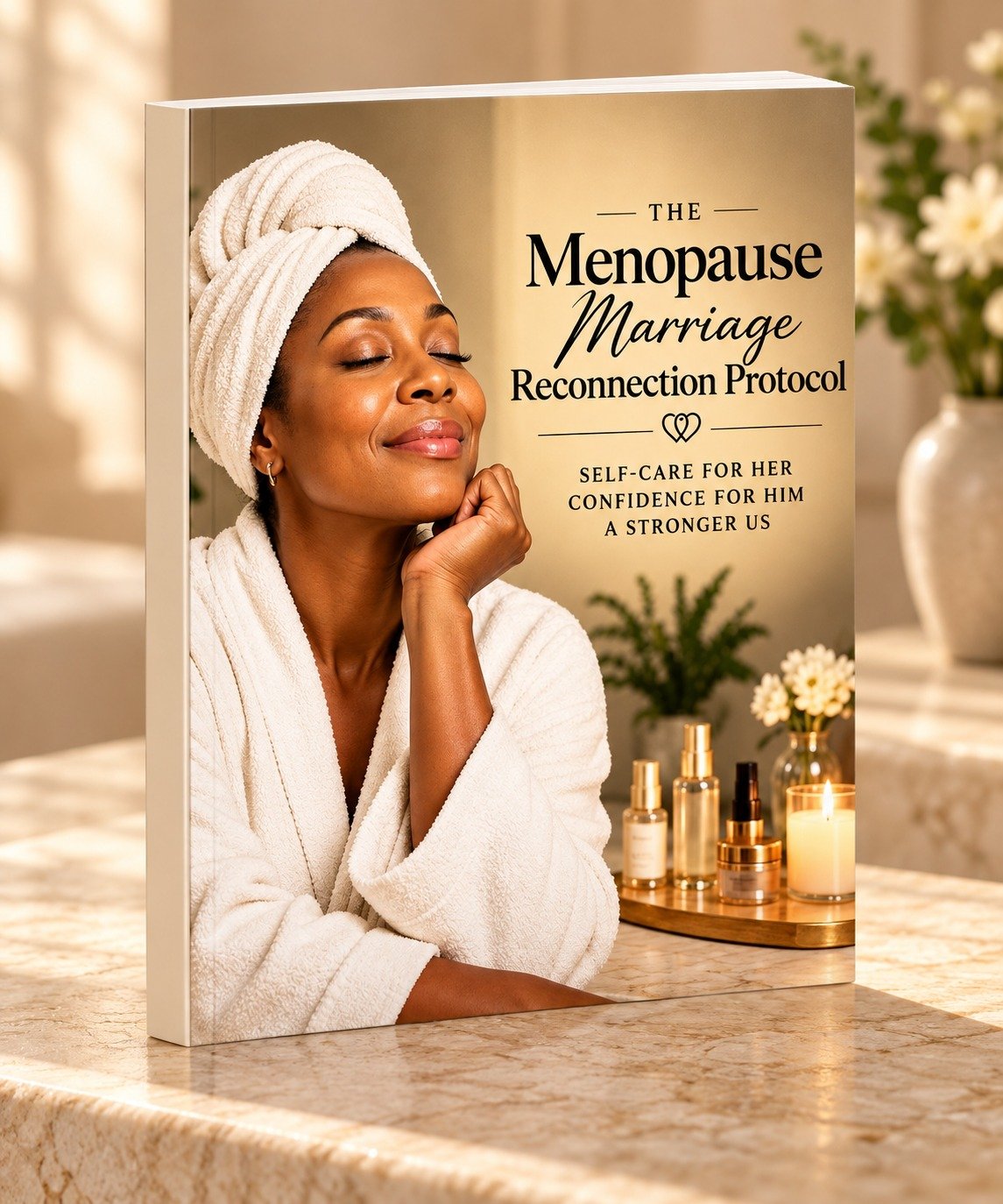
The Menopause Marriage Reconnection Protocol
A complete digital guide walking you through nine chapters, from understanding what is actually happening to your hormones and mood, to having the first honest conversation with your husband, to rebuilding physical and emotional closeness at your own pace.
Every worksheet, script, and tracker mentioned inside is included in full and ready to use: the Symptom and Trigger Journal, the First Conversation Script, the Desire-Mapping Exercise, the Comfort Options Checklist, and the Bids-for-Connection Tracker.
The Complete Menopause Marriage Reconnection Protocol
What's Inside The Protocol
Nine chapters. Every worksheet, script, and tracker referenced is written out in full inside the guide, ready to use directly.
Plus, 4 Bonuses Included at No Extra Cost
Built to make the hardest parts, starting the conversation and keeping it going, easier than doing this alone.
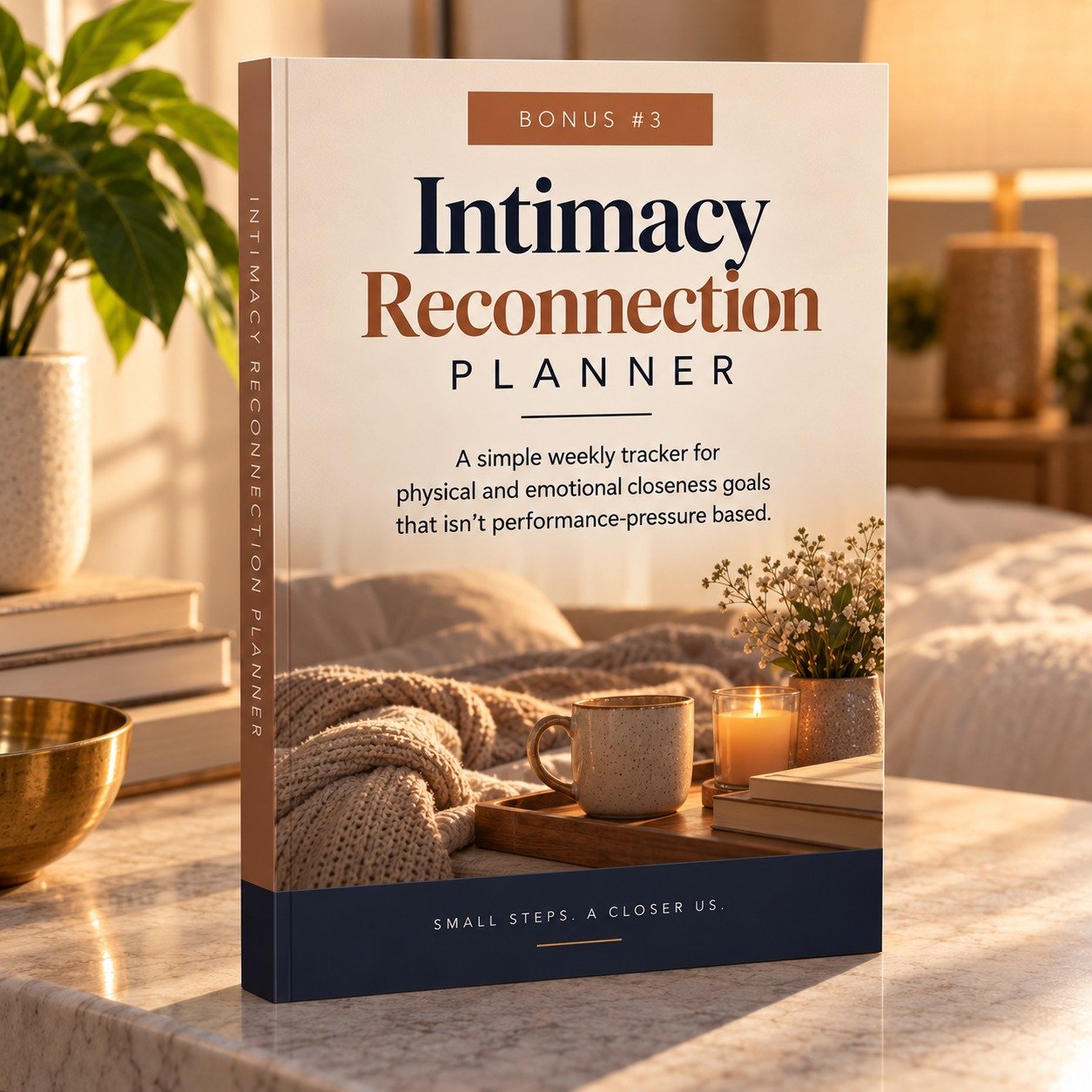
Everything You Get Today
What Readers Are Saying
Questions You Might Have
Most of what you have probably tried starts with the relationship and hopes the rest follows. This starts with understanding what is actually happening in your body first, using the Symptom and Trigger Journal and the responsive desire reframe, and only then moves into structured scripts for the conversation itself. It is not another generic "spice things up" list.
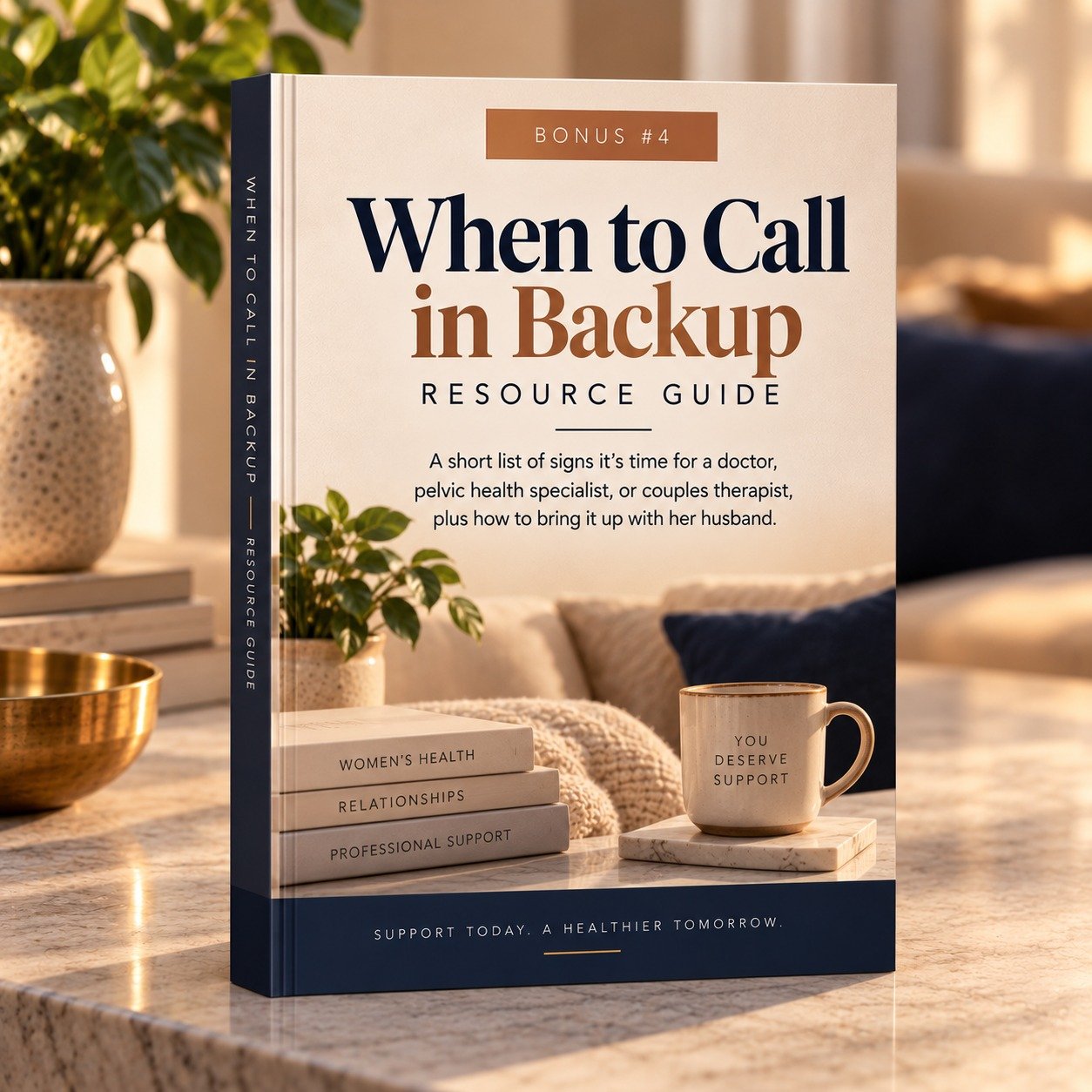
No. Chapter 8 is built specifically to help you recognise when it is time to bring in a GP, a pelvic health specialist, or a couples therapist, and how to raise it. This guide is educational and does not replace medical advice or diagnosis.
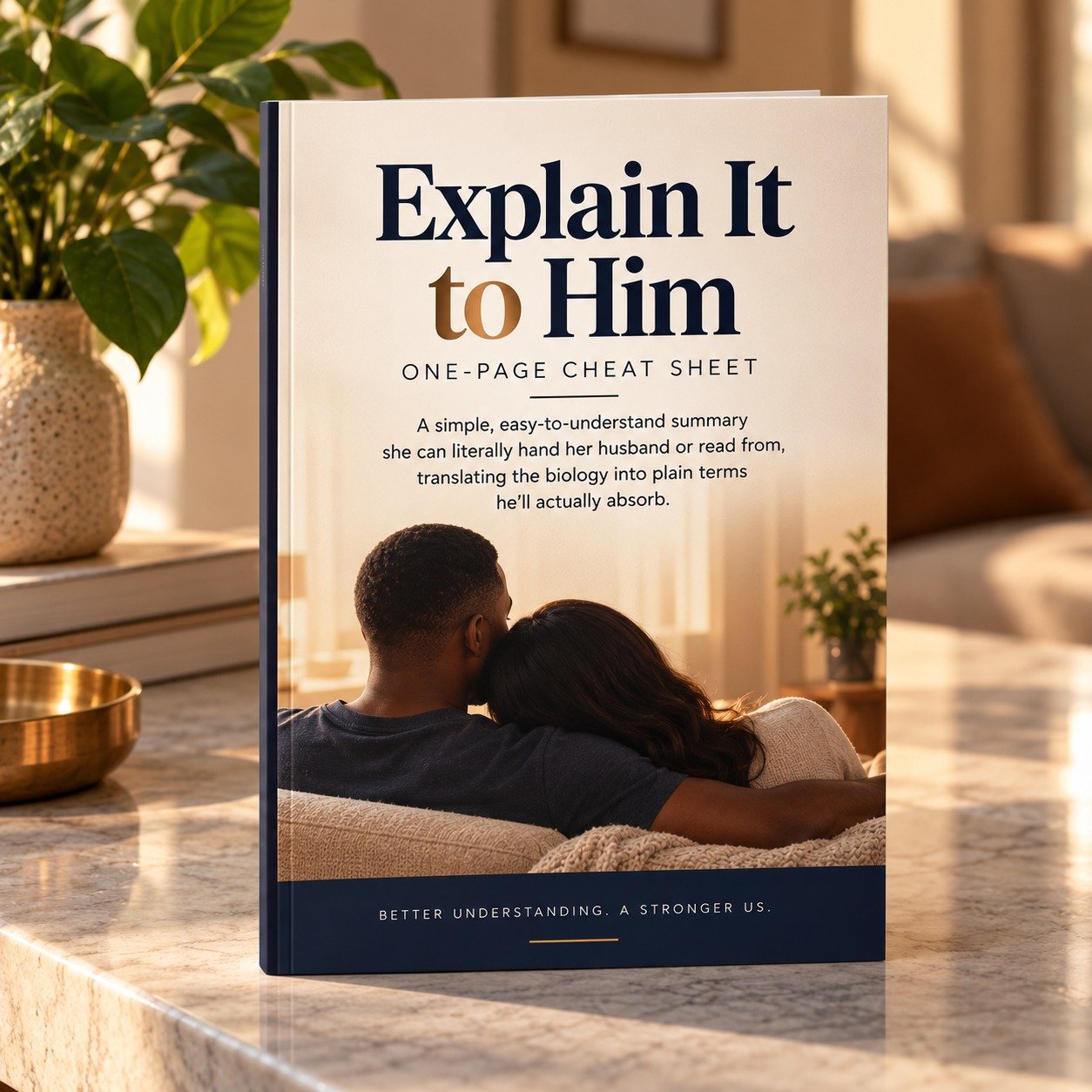
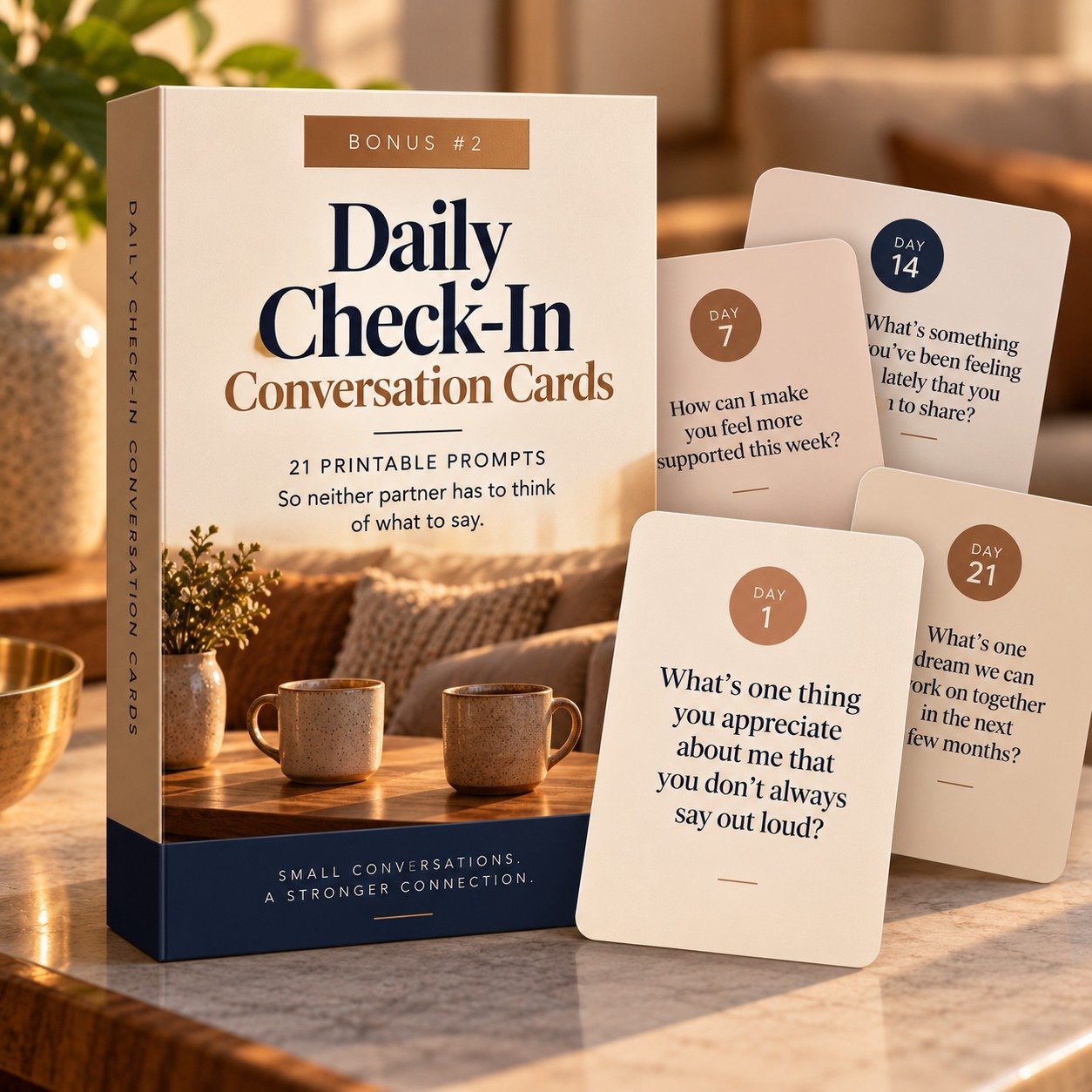
He does not need to read the guide itself. The "Explain It to Him" bonus is a one-page cheat sheet written specifically for him, so he can understand what is happening without sitting through the whole book, and the Daily Check-In Cards give you both a low-pressure way to keep talking afterward.
The protocol is built around small, specific steps rather than one big conversation that has to fix everything at once. Most of the distance that builds up during this transition comes from a lack of shared understanding, not from something unfixable. Chapter 7 in particular focuses on rebuilding through small daily moments, not a single dramatic turnaround.
Both. The hormonal and mood content in Chapter 1 covers the perimenopause to menopause transition as a whole, since the mood, desire, and connection changes described here typically begin well before periods actually stop.
The guide and all 4 bonuses are delivered digitally and instantly after checkout, with no packaging or labelling that reveals the topic. You can read it privately, at your own pace, before deciding what to share with your husband and when.
You Have Two Options From Here
Close this page, keep hoping the distance closes on its own, and keep wondering privately whether something is actually wrong with your marriage.
Spend the next 21 days understanding what is actually changing in your body, and use that understanding to start closing the distance with your husband.
The marriage was never the problem. You just have not had the full picture yet.
Get The Menopause Marriage Reconnection Protocol
Get Instant Access: £1021-day protocol + 4 bonuses. Instant delivery.
P.S. If you only do one thing tonight, do the 20-minute Quick Win in Chapter 1: your first entry in the Symptom and Trigger Journal. It gives you, in writing, a clear picture of your own mood, sleep, and triggers over the last 24 hours, often the first time any of this has actually been written down instead of just carried around in your head.
The price above is at its early-access level. It rises as more tools are added to the library, so there is very little to lose by starting tonight instead of telling yourself you will get to it eventually.